




Special Collections:
Forests and Oceans
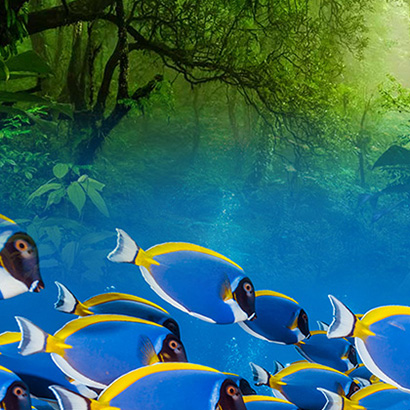


Explore the impressive abilities of cold-weather animals, from polar bears to penguins, in our Marine Life Encyclopedia. Subscribe to our channel and join our community of Wavemakers.
Stay connected with us on social media: Instagram, Twitter, and Facebook.

While similar, dugongs and manatees are distinct species. A key difference is their tails: manatees have round, paddle-like tails, whereas dugongs possess whale-like flukes.
Learn more in our Marine Life Encyclopedia and subscribe to join our community of Wavemakers!

Orcas are the largest members of the dolphin family. Learn more in our Marine Life Encyclopedia: https://bit.ly/3OZR0dY
Join our community of Wavemakers by subscribing to our channel! Stay connected with us on social media: Instagram | Twitter | Facebook

Nurse sharks may nap often, but they're not anti-social! Learn more about these fascinating creatures in our Marine Life Encyclopedia: https://bit.ly/45cuZyd
Join our community of Wavemakers! Stay connected and subscribe by following us on Instagram, Twitter, and Facebook.

Manatees can hold their breath for up to 20 minutes, spending much of their time underwater feeding on sea grasses and other vegetation. Support these gentle giants by symbolically adopting a Florida manatee today: bit.ly/3OYvPsL.
Join our community of Wavemakers! Subscribe to our channel and stay connected. Follow us on social media:

Invasive lionfish severely damage marine ecosystems. During a 2021 expedition to Mexico's Bajos del Norte reef system, Oceana discovered these invaders at almost every site visited. Learn more about our findings here.
Join our community of Wavemakers by subscribing to our channel. Stay connected with Oceana on Instagram, Twitter, and Facebook.

The blue whale, the largest animal to ever exist, can consume 10 to 20 tons of food daily. Learn more in our Marine Life Encyclopedia.
Join our community of Wavemakers! Subscribe to our channel and connect with us on Instagram, Twitter, and Facebook. p>

Polar bear cubs spend over two years with their mothers, learning vital survival and hunting skills for their harsh environment. Discover more in our Marine Life Encyclopedia.
Join our community of Wavemakers! Subscribe to our channel and connect with us on social media: Instagram, Twitter, and Facebook.
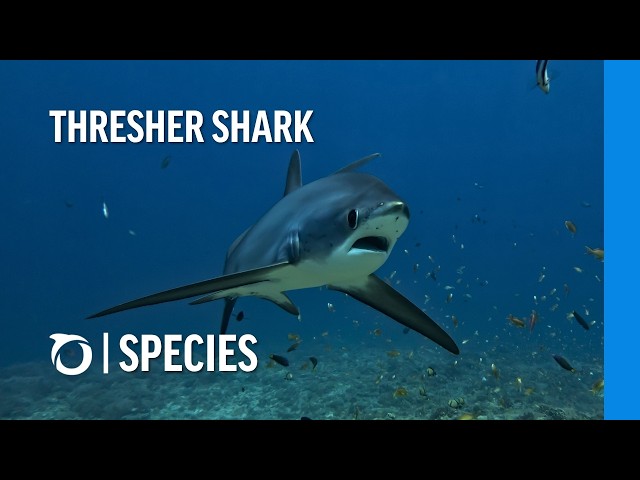
Thresher sharks use their long, whip-like tails to stun prey. Learn more in our Marine Life Encyclopedia: Marine Life Encyclopedia.
Join our community! Subscribe to our channel and connect with us on social media: Instagram, Twitter, and Facebook.

The southern blue-ringed octopus, named for its vibrant rings, is a small but deadly cephalopod, growing up to 8 inches. Despite its potent venom, this creature is not aggressive, biting only when agitated. It prefers to hunt small prey like crabs and patrol its tide pools undisturbed.
Learn more about marine life in our [Encyclopedia](https://bit.ly/3sfyfKI). Subscribe to our channel and join our community of Wavemakers! p>
Stay connected with us on [Instagram](https://www.instagram.com/oceana/), [Twitter](http://twitter.com/oceana), and [Facebook](https://www.facebook.com/oceana/).

Emperor penguin dads are among the most committed in the ocean. Help protect these magnificent birds with a symbolic adoption: https://bit.ly/3YAms5R
Join our community of Wavemakers! Subscribe to our channel and stay connected on social media: Instagram, Twitter, and Facebook.


Decorator crabs achieve camouflage by attaching pieces of their surroundings—algae, sponges, leaves, or even small animals like anemones—to curved, hooked bristles on their shells. These bristles function like Velcro, allowing the crabs to easily change their decorations.
Explore more in our Marine Life Encyclopedia: https://bit.ly/3E0FYie. Subscribe to our channel and join our community of Wavemakers! p>

Sea otters are threatened and highly vulnerable to extinction due to oil pollution, shifts in the food web, and habitat loss. When doused in oil, an otter’s fur loses its insulating properties, putting the animal at risk of hypothermia.
Symbolically adopt a sea otter today: https://bit.ly/3KJ0J5V
Stay connected with us. Follow Oceana on Instagram, Twitter, and Facebook.

Beluga whales are often called the "canaries of the sea."
Discover more about these fascinating marine mammals in our Marine Life Encyclopedia.

Watch to discover the names of five baby marine animals you might not know.
Join our Wavemakers community by subscribing to our channel. Stay connected with us on social media:
INSTAGRAM: https://www.instagram.com/oceana/
TWITTER: http://twitter.com/oceana
FACEBOOK: https://www.facebook.com/oceana/

The whale shark, the ocean's largest fish, consumes tiny prey such as plankton, fish eggs, and schooling fish. Discover more in our Marine Life Encyclopedia.
Join our community of Wavemakers! Subscribe to our channel and stay connected on social media: Instagram, Twitter, and Facebook.

Environmental Scientist and Advocate
What EarthSayers stands for
Discover Diverse Voices on EarthSayers
Unlike algorithm-driven platforms that push you into a content bubble, we ensure you hear a variety of perspectives from scientists, activists, Indigenous leaders, business innovators, and everyday citizens working toward sustainability.
EarthSayers CINEMA
Watch, learn and lead—sustainability starts with you.
The Many Passions of Matteo Lane
Matteo Lane is a multifaceted artist—stand-up comedian, painter, singer, and Broadway performer. In this interview, he shares how these skills intertwine in his creative process, likening art to a tree that branches out in various directions.
We explore his role as Billy Flynn in Broadway’s Chicago, his journey from bar shows to international comedy tours, and the evolution of gay representation in comedy. Lane also discusses his artistic roots at the School of the Art Institute of Chicago, his admiration for Maria Callas, and his philosophy of focusing on the journey of creation rather than the end product.
Official website: pbs.org/americanmasters


