




Special Collections:
Forests and Oceans
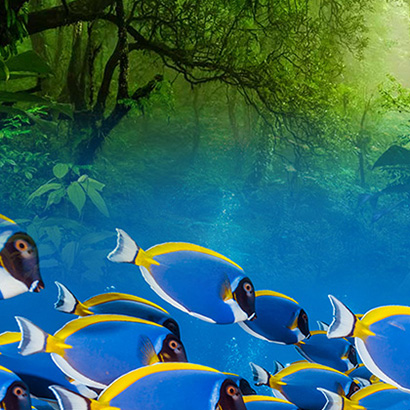


Sir David Attenborough has shared an update from Blue Planet II regarding plastic consumption.
Born on 8 May 1926, Sir David Frederick Attenborough is an English broadcaster and natural historian. He is renowned for writing and presenting the BBC's "Life collection," a series of nine natural history documentaries that comprehensively survey Earth's animal and plant life.

"A Plastic Ocean" is an adventure documentary filmed over four years across more than 20 locations.
Explorers Craig Leeson and Tanya Streeter, with international scientists, reveal the causes and consequences of plastic pollution, offering solutions.

The southern rockhopper penguin is named for its distinctive hopping behavior on land, a trait that sets it apart from most other penguins. Unlike their more awkward counterparts, rockhoppers navigate terrestrial environments with surprising agility. Learn more: https://bit.ly/3bYatVU
Join our community of Wavemakers by subscribing to our channel.

The Peacock mantis shrimp, a vibrant crustacean inhabiting Indo-Pacific coral reefs, is renowned for its incredibly fast and powerful punch.
This strike, delivered with specialized front appendages, is among the fastest movements in the animal kingdom. It is strong enough to shatter aquarium glass and effectively dispatch prey.
Learn more: https://bit.ly/3aSd9EN

Peru's ocean is the world's most productive marine ecosystem, featuring the unique Nazca Ridge. However, less than 0.5% of Peru's ocean is currently protected, leaving this vital habitat vulnerable.
Join Oceana in urging President Vizcarra to establish the Nazca Ridge Marine Protected Area. This crucial step will help restore Peru's abundant oceans for future generations. Take action here: https://bit.ly/2UyXTXj

Explore different ray species in Oceana's Marine Life Encyclopedia: https://bit.ly/3blpPno
Subscribe to our channel and join our community of Wavemakers! p>
Connect with us on social media: Instagram: https://www.instagram.com/oceana/, Twitter: http://twitter.com/oceana, Facebook: https://www.facebook.com/oceana/.

The scarlet frogfish, an ambush predator of Indian and Pacific coral reefs, is a master of disguise. Difficult to spot, it uses modified fins resembling legs to move and rest, which gives it its common name. Learn more: http://bit.ly/33tS4xt
Subscribe to our channel and join our community of Wavemakers! Stay connected with us on: Instagram: https://www.instagram.com/oceana/, Twitter: http://twitter.com/oceana, and Facebook: https://www.facebook.com/oceana/

In her reflection titled "Disconnection," Julia Butterfly Hill introduces "separation syndrome" as the fatal consequence of severing our ties to life. She illustrates this by noting that a plant dies when its roots are ripped from the earth, mirroring how humanity perishes when we detach from our connected consciousness.
Hill argues that this profound disconnection leads to the demise of our planet, our human families, and the entire global family. Her message underscores the critical importance of recognizing and nurturing our interconnectedness for collective survival.

Nearly $1 million in shark fins were seized at Miami's port. Demand a U.S. fin trade ban by calling for #FinBanNow: http://bit.ly/2PNaUK7
Subscribe to our channel and join our community of Wavemakers.
Stay connected with us on social media: Instagram, Twitter, and Facebook.

Our oceans are overwhelmed by plastic pollution. The U.S. Congress has introduced the Break Free From Plastic Pollution Act, a landmark bill designed to phase out single-use plastics and shift the responsibility for waste to producing companies.
Protect marine life and our oceans by urging your members of Congress to support this vital legislation. Take action now: http://bit.ly/2Ic52Ga.
Join our community of Wavemakers! Subscribe and stay connected with us: https://www.instagram.com/oceana/, http://twitter.com/oceana, https://www.facebook.com/oceana/.

A marine heatwave, "the Blob," killed 1 million seabirds in the Pacific Ocean. Learn how to combat climate change and support ocean conservation by joining Oceana at [OCEANA.ORG/JOIN](https://www.oceana.org/join).
Subscribe to our channel and become a Wavemaker! Stay connected with Oceana on social media: [Instagram](https://www.instagram.com/oceana/), [Twitter](http://twitter.com/oceana), and [Facebook](https://www.facebook.com/oceana/).

The bobtail squid is a "sit and wait" predator, burying itself in the sand with its eight arms and two tentacles to ambush prey. Discover more about marine life in our encyclopedia: http://bit.ly/2HUBtsG
Subscribe to our channel to join our community of Wavemakers!

On December 7, 2019, C2G convened a UNFCCC COP25 side event to discuss governing emerging marine climate-altering techniques. Thelma Krug, Vice Chair of the Intergovernmental Panel on Climate Change (IPCC), participated in the panel.
These techniques are being explored within the context of the Paris Agreement and the ocean's role in achieving its goals. However, none are ready for large-scale deployment, posing significant technological and governance challenges that require stakeholder attention.
Learn more about marine technology here.

Paul Watson delivered a significant address at the 7th Annual meeting of The Nantucket Project.
Watson, a Canadian-American marine wildlife conservationist and environmental activist, founded the Sea Shepherd Conservation Society. This organization conducts anti-poaching and direct action campaigns for marine conservation.
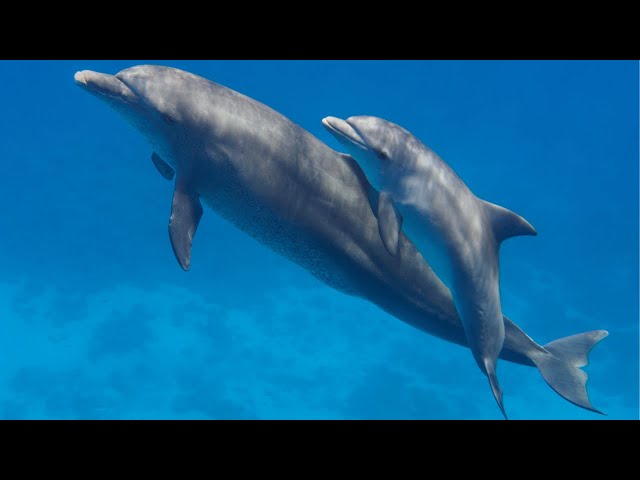

It's time to #BreakFreeFromPlastic. Learn more about our mission and how you can contribute to a healthier ocean: http://bit.ly/390gv7k
Join our community of Wavemakers! Subscribe to our channel to stay updated and make a difference. p>
Stay connected with us on social media: Instagram | Twitter | Facebook
Environmental Scientist and Advocate
What EarthSayers stands for
Discover Diverse Voices on EarthSayers
Unlike algorithm-driven platforms that push you into a content bubble, we ensure you hear a variety of perspectives from scientists, activists, Indigenous leaders, business innovators, and everyday citizens working toward sustainability.
EarthSayers CINEMA
Watch, learn and lead—sustainability starts with you.
The Many Passions of Matteo Lane
Matteo Lane is a multifaceted artist—stand-up comedian, painter, singer, and Broadway performer. In this interview, he shares how these skills intertwine in his creative process, likening art to a tree that branches out in various directions.
We explore his role as Billy Flynn in Broadway’s Chicago, his journey from bar shows to international comedy tours, and the evolution of gay representation in comedy. Lane also discusses his artistic roots at the School of the Art Institute of Chicago, his admiration for Maria Callas, and his philosophy of focusing on the journey of creation rather than the end product.
Official website: pbs.org/americanmasters


