



Special Collections:
Farming and Food Production

Addressing antimicrobial resistance (AMR) necessitates various actions, particularly the generation of evidence. Reliable, timely, and harmonized data is crucial for understanding risks, guiding investments, informing policies, and measuring progress.
For more information, visit FAO Events. © FAO: www.fao.org #SDGs #Agenda2030 #GlobalGoals

This event aims to share evidence, tools, and experiences on managing heavy metals in production systems. It promotes knowledge exchange to enhance food safety, sustainability, and market access.
For more information, visit FAO Event Details. © FAO: www.fao.org #SDGs #Agenda2030 #GlobalGoals

World Food Day 2026 celebrated innovation for a sustainable future in Viet Nam, uniting farmers, women leaders, youth, researchers, and development partners. Key highlights included honoring 10 exceptional Vietnamese women farmers, showcasing sustainable rice production innovations, and empowering youth and farmers to transform agriculture.
Watch how FAO Viet Nam and its partners are turning innovation into action to nourish tomorrow! Subscribe to their channel here.
Follow FAO on social media: Facebook, Instagram, LinkedIn, TikTok, X, Weibo. © FAO: fao.org #SDGs #Agenda2030 #GlobalGoals

The FAO, supported by Belgium, has assisted 37,500 drought-affected livestock keepers in Hama, Homs, Rural Damascus, Aleppo, and Idleb by vaccinating 150,000 cattle against Foot-and-Mouth Disease (FMD). This partnership aims to provide vulnerable farmers with essential animal health services and quality agricultural inputs, helping them sustain their livelihoods.
Additionally, FAO delivered 1,000 metric tonnes of fodder to support 20,000 sheep and goats owned by 2,000 smallholder farmers in the targeted areas.
Subscribe to FAO on YouTube: FAOoftheUN. Follow FAO on Facebook, Instagram, LinkedIn, TikTok, X, and Weibo.

The Tropical Forest Forever Facility (TFFF) Environmental Eligibility and Forest Monitoring Awareness Framework aids experts in eligible countries by clarifying forest monitoring features and requirements. It facilitates national teams in assessing their forest monitoring systems, understanding eligibility criteria, and planning for TFFF readiness through guided discussions.
This video features Evelyn Roque from Peru, who highlights TFFF's role in supporting long-term forest conservation financing, the allocation for Indigenous Peoples, and the challenges of forest monitoring.
Download the framework: here. Learn more about Forest Monitoring and TFFF here. Explore AIM4Forests here.

Le programme FISH4ACP aide les Îles Marshall à améliorer la durabilité de leur secteur thonier et à renforcer leur rôle en tant que plaque tournante pour les débarquements de thon. Il a fourni un chargeur de thon pour optimiser la manutention, dispensé des formations pour développer les compétences, et créé des opportunités d'emploi pour les femmes et les jeunes.
FISH4ACP, une initiative de l’OEACP, vise à assurer la durabilité des chaînes de valeur de la pêche et de l’aquaculture en Afrique, dans les Caraïbes et le Pacifique. Ce programme est mis en œuvre par la FAO et financé par l'Union européenne et le Ministère fédéral allemand de la coopération économique et du développement.

BlackSea4Fish aims to collaborate with member countries to tackle national and regional fishery priorities for a sustainable future. It enhances the GFCM fisheries advisory process by helping countries improve their data collection and information quality for sustainable fisheries management.
This initiative is primarily funded by the European Union, with additional support from the Global Environment Facility’s project on fisheries and ecosystem-based management in the Black Sea. For recent activities and results, view the latest BlackSea4Fish brochure.

Cooperatives play a crucial role in transforming agrifood systems. In this video for the side event "Advancing Social Development and Social Justice Through Cooperative and SSE Solutions," Jun He from FAO discusses how cooperatives support small-scale and family farmers, especially women, in accessing markets, services, finance, and decision-making.
As we approach the International Year of Cooperatives 2025 and the International Year of the Woman Farmer 2026, the statement urges Member States, UN agencies, and cooperative actors to take action to enhance the leadership and rights of women farmers.
Subscribe to FAO: YouTube. Follow FAO on Facebook, Instagram, LinkedIn, TikTok, X, and Weibo.

Cooperative financial institutions are essential for creating inclusive and equitable agrifood systems. In this video for the International Symposium on Cooperative Financial Institutions, Cécile Berranger from FAO discusses how savings and credit cooperatives, cooperative banks, and credit unions support small-scale farmers, women, and youth in accessing finance and investing in climate adaptation.
She emphasizes the importance of enabling policy frameworks and financial literacy through FAO’s Farm Business School Forward programme. As 2026 approaches, marking the International Year of the Woman Farmer and the International Year of Rangelands and Pastoralists, Berranger highlights the vital role of cooperatives for women farmers and pastoral communities, reaffirming FAO’s commitment to collaborating with the International Cooperative Alliance and COPAC members.

The FISH4ACP program, supported by the Food and Agriculture Organization of the United Nations, aims to enhance the sustainability of the tuna sector in the Marshall Islands and strengthen its role as a tuna landing hub. This initiative has introduced a tuna loader to improve handling efficiency, provided training to develop local skills, and created job opportunities for women and youth.
FISH4ACP is a collaborative effort of the Organisation of African, Caribbean and Pacific States, funded by the European Union and the German Federal Ministry for Economic Cooperation and Development. For more information, visit FISH4ACP.

Mongolia's rangelands cover 80% of the land, with pastoralism deeply rooted in its culture and identity. A study by FAO and the Green-Gold Mongolia Rangeland Research Center reveals that Mongolia's pastoral systems support biodiversity better than other livestock systems, emphasizing the importance of mobility for land regeneration.
The study also underscores the vital role of pastoralist women in production, domestic work, and decision-making, despite their limited access to resources. It advocates for increased support for mobile pastoral systems and the empowerment of pastoralist women.
Subscribe to FAO on YouTube: FAOoftheUN. Follow FAO on Facebook, Instagram, LinkedIn, TikTok, X, and Weibo.
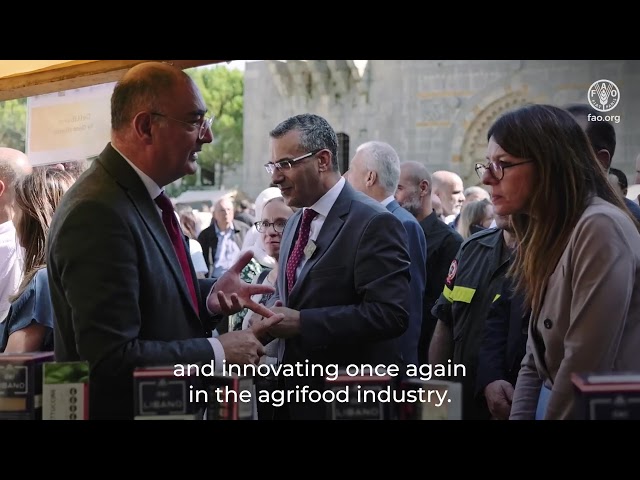
The Ministry of Agriculture, the Food and Agriculture Organization (FAO), and the World Food Programme (WFP) celebrated World Food Day 2026 in Baadaran, Chouf, under the theme "Innovate today. Nourish tomorrow." The event, attended by H.E. Dr. Nizar Hani, Minister of Agriculture, gathered representatives from diplomatic missions, public institutions, international organizations, municipalities, agricultural unions, cooperatives, farmers, and food producers.
Stay connected with FAO: Subscribe on YouTube. Follow FAO on Facebook, Instagram, LinkedIn, TikTok, X, and Weibo. © FAO: fao.org #SDGs #Agenda2030 #GlobalGoals

The FAO concluded its role as a key partner in Global Food Week 2026 (October 5–9), uniting leaders, policymakers, and innovators to enhance global food security. Through the FAO Agrifood Policy Majlis, they facilitated dialogue on agrifood priorities, while YALAFAST empowered youth to tackle food system challenges.
FAO also engaged in high-level discussions on international cooperation, food equality, and investment, emphasizing the importance of AI, digital technologies, and water security in creating resilient agrifood systems. For more details, visit FAO's website.

World Food Day 2026 united governments, youth, farmers, and communities across Asia and the Pacific under the theme "Innovate Today, Nourish Tomorrow." The event highlighted the importance of dialogue and collaboration in addressing food security, nutrition, and transforming agrifood systems.
Watch the highlights from the celebrations and see how countries and partners are committed to these vital issues. Subscribe to the FAO YouTube channel for more updates.
Follow FAO on social media: Facebook, Instagram, LinkedIn, TikTok, X, Weibo. © FAO: fao.org #SDGs #Agenda2030 #GlobalGoals

In Lumajang, East Java, Indonesia, the FAO's One Country, One Priority Product (OCOP) initiative is enhancing the ladyfinger banana value chain using the Geographical Indications, Environment, and Sustainability (GIES) methodology. The first GIES station in Indonesia employs advanced monitoring technology, IoT, and environmental data to improve agricultural traceability and farming practices while boosting product recognition.
Collaborating with the Chinese Academy of Sciences, Indonesian Directorate-General of Horticulture, and Jember University, this initiative fosters knowledge sharing and sustainable production, creating better economic opportunities for smallholder farmers and expanding the market reach of Lumajang's ladyfinger banana.

The FAO, supported by Belgium, has assisted 37,500 drought-affected livestock keepers in Hama, Homs, Rural Damascus, Aleppo, and Idleb by vaccinating 150,000 cattle against Foot-and-Mouth Disease (FMD). This partnership aims to provide vulnerable farmers with essential animal health services and quality agricultural inputs, helping them sustain their livelihoods.
Additionally, FAO delivered 1,000 metric tonnes of fodder to benefit 20,000 sheep and goats owned by 2,000 smallholder farmers in the targeted areas.
Subscribe to FAO on YouTube: FAOoftheUN. Follow FAO on social media: Facebook, Instagram, LinkedIn, TikTok, X, Weibo.

The Tropoja valley in northern Albania is home to remote villages rich in nature and tradition, yet they struggle to access markets. The FAO Digital Villages Initiative (DVI) is helping local farmers, guesthouse owners, and young entrepreneurs enhance their digital skills to attract new customers and visitors.
Innovations include a GPS-enabled hiking trail and the first geospatial map of Tropoja’s ancient chestnut forests, merging nature with technology. For more updates, subscribe to the FAO YouTube channel and follow FAO on Facebook, Instagram, LinkedIn, TikTok, X, and Weibo.

In Santiago, Chile, the Harlem Globetrotters, FAO Goodwill Ambassadors, participated in the World Food Day 2026 celebrations, showcasing their basketball skills while promoting healthy eating and physical activity. Chef Heinz Wuth joined them to emphasize the importance of well-being for children and families.
The event highlighted that taking care of ourselves can be enjoyable. Share your favorite moment in the comments!
Subscribe to FAO: YouTube. Follow FAO on Facebook, Instagram, LinkedIn, TikTok, X, and Weibo. Visit FAO for more information.

For 80 years, the Food and Agriculture Organization of the United Nations (FAO) has collaborated with countries to enhance animal production and health, safeguard livestock, support livelihoods, and improve food security. FAO's initiatives, from eradicating rinderpest to global projects like RENOFARM, focus on sustainable agrifood systems.
Through science and innovation, FAO advances disease prevention, surveillance, and response, fostering resilient livestock systems. Learn more at FAO Animal Production and Health.
Subscribe to our channel: FAO on YouTube. Follow us on Facebook, Instagram, LinkedIn, TikTok, X, and Weibo.

This documentary showcases fish farmers in Nigeria who are turning small-scale aquaculture into a commercial venture through the FISH4ACP project. Implemented by FAO and funded by the EU and BMZ, the initiative empowers producers by introducing data-driven management, alternative feed, modern smoking kilns, and access to finance, fostering a sustainable value chain.
Stay connected with FAO on social media: Facebook, Instagram, LinkedIn, TikTok, X, Weibo. For more information, visit FAO.
Environmental Scientist and Advocate

