




Showing 20 search results of 4,101 videos found for

Adrian Dix, a Canadian politician, serves as MLA for Vancouver-Kingsway and leader of the British Columbia New Democratic Party. He is actively working to stop violence against women, referencing the December 2012 report on missing and murdered women in Vancouver, BC.
Further resources on this critical issue include the Missing Women Blog, a Wikipedia entry on the BC Missing Women Investigation, and the Missing Justice website, which focuses on missing Indigenous women.

Ben Collen explains current methods for monitoring biodiversity loss and introduces novel approaches to the challenge.
This discussion was originally published on January 29, 2013, via the Yale University YouTube channel. Learn more about Ben Collen.

Katrin Boehning-Gaese discusses models and methods. Her research predicts climate change's impact on species distributions.
This content was originally published on January 29, 2013.

In December 2010, Donal Berwick addressed the Commonwealth Club, speaking from his perspective as Administrator of the Centers for Medicare and Medicaid Services (CMS). This marked his fifth month in the leadership role.
His speech, "Modernizing Medicare and Medicaid: How to Upgrade America's Health Care," offered insights on improving America's healthcare system.

Donald Berwick, former head of the U.S. Centers for Medicare and Medicaid Services, delivered the keynote address at Harvard Medical School's Class Day 2012.
Berwick urged graduates to let their oath to care for all patients be their "true compass" amidst medicine's challenging landscape. He underscored healthcare as a fundamental human right.

From April 4-6, 2012, the Indigenous Environmental Network hosted a three-day Rights of Mother Earth Conference at Haskell Indian Nations University in Lawrence, Kansas. This video features a presentation from the conference. Additional coverage is available on the IENearth YouTube Channel.
The presentation includes closing remarks, stressing that land degradation stems from ignoring Indigenous Knowledge. It challenges viewers to choose between disregarding sustainable systems and embracing the ancient wisdom that sustained people for millennia.

This video, uploaded May 1, 2011, draws inspiration from the Universal Declaration of Mother Rights. Proclaimed in 2010 at the World People's Conference on Climate Change and the Rights of Mother Earth in Cochabamba, Bolivia, the declaration's Preamble and Articles 1 and 2 are read in the video.
Access the full text of the [Universal Declaration of Mother Rights](http://therightsofnature.org/universal-declaration/).

Amy Goodman interviewed Maude Barlow on Earth Day 2011, discussing the progress of the Declaration of the Rights of Mother Earth within the United Nations. The interview also covered a resolution addressing harmony with nature.
Barlow referenced the book, The Rights of Nature: The Case for the Universal Declaration of the Rights of Mother Nature.

Mari Margil, Associate Director of the Community Environmental Legal Defense Fund (CELDF), discusses the founding of the Global Alliance for the Rights of Nature in Fall 2010.
CELDF's mission is "Building sustainable communities by assisting people to assert their right to local self-government and the rights of nature." Margil was interviewed by Barry Heidt of SustainableTV at the Bioneers 2010 Conference in San Rafael, California. This content was edited and curated by Ruth Ann Barrett in January 2013.
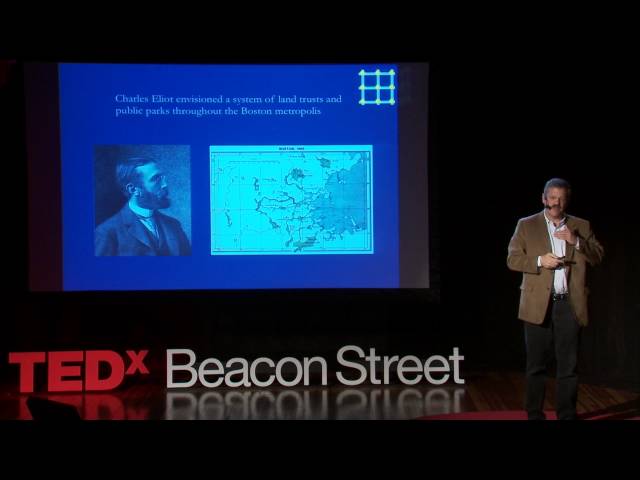
From 17th-century Boston Common to 21st-century large-landscape initiatives, innovators have tackled complex land, water, and biodiversity challenges. Addressing today's global conservation needs demands our best talent, technology, financial tools, and social innovation.
Innovation is characterized by five attributes: novel conception, strategic or cultural significance, measurable effectiveness, global transferability, and enduring impact for decades or centuries.
Jim Levitt directs the Program on Conservation Innovation at Harvard Forest, Harvard University, and is a fellow at the Lincoln Institute of Land Policy.

Shifting the global energy system away from coal is imperative. Those with control and access to capital bear the greatest responsibility for this critical challenge.
John Fullerton, Founder and President of Capital Institute, leads a collaborative dedicated to transforming finance. Their aim is to foster a more just, resilient, and sustainable economic system.

This animation explores a post-consumer society, envisioning a future with fewer work hours, increased re-skilling, homesteading, and small-scale enterprises. These shifts aim to reduce the consumer economy's overall size and impact. It is narrated by economist and best-selling author Juliet Schor and produced by The Center for the New American Dream.
Dr. Schor's book, *Plenitude*, delves deeper into these concepts. You can order it from Amazon or find it at your local bookstore.

This infographic and animation tracks cumulative natural gas wells drilled in Pennsylvania from January 2005 to April 2012, highlighting the state's transition from conventional vertical to horizontal drilling.
Horizontal wells, primarily in the Marcellus, Utica, and Geneseo/Burket shale formations, increased significantly. Concurrently, less productive vertical wells declined, resulting in an overall decrease in new well counts.
For a comprehensive analysis, read the full Today in Energy article here.

In "Promised Land," Matt Damon stars as Steve Butler, a corporate salesman, who, with partner Sue Thomason (Frances McDormand), targets a rural town for his company's expansion. Their mission involves securing drilling rights, bringing them into conflict with the local community.
The film explores the tension between big business interests and small-town values, specifically focusing on the controversial practice of fracking in rural America.

Slavery is fundamentally about commerce. Acclaimed humanitarian photographer Lisa Kristine specializes in capturing images of remote indigenous peoples, known for her evocative and saturated use of color.
Kristine collaborates with international humanitarian organizations, presenting her work to inspire discussions on human rights and social change. This content was recorded at TEDxMaui 2012 on January 22, 2012, at the Maui Arts & Cultural Center.

Dr. Ken Blanchard is a renowned author, prominent speaker, and highly sought-after business consultant. He co-founded The Ken Blanchard Companies in 1979 with his wife, Dr. Margie Blanchard, and currently serves as its Chief Spiritual Officer.
An international training and consulting firm, The Ken Blanchard Companies is built on the principles Dr. Blanchard has shared in nearly forty books, including the best-seller *The One Minute Manager*.

TED Fellow Marcin Jakubowski is open-sourcing blueprints for 50 farm machines, enabling anyone to build their own tractor or harvester. This initiative, launched in April 2011, is the first step in a larger project to create an instruction set for an entire self-sustaining village, with an estimated starting cost of $10,000.
For more details, visit the Open Source Ecology website. Additional information is available on TED.com.

Melting glaciers underscore how climate change is already a harsh reality for the world's poorest. This slow, silent disaster is causing dramatic water shortages, affecting millions.
Scientists are deploying satellite technology to find solutions for these critical water issues, particularly in the Andean region.
December 19, 2012

WWF's Global Marine Programme works to increase international attention for ocean conservation and protect the high seas.
These international waters, comprising 64% of the oceans (half the planet), lie beyond national jurisdiction and are open-access common areas. For more information, visit panda.org/highseas.

Joes Segal is a Professor of Cultural History at Utrecht University. His research focuses on modern art, cultural history, and the intersection of art and politics, particularly in Europe, the US, the Soviet Union, and China since 1945. He also investigates cultural boundaries and identity.
Segal authored *East German Material Culture and the Power of Memory* (2011) and *Divided Dreamworlds? The Cultural Cold War in East and West* (2012). He served as a guest curator at the Wende Museum and a guest professor at UCLA, supported by a Senior Research Grant.
Environmental Scientist and Advocate
What EarthSayers stands for
Discover Diverse Voices on EarthSayers
Unlike algorithm-driven platforms that push you into a content bubble, we ensure you hear a variety of perspectives from scientists, activists, Indigenous leaders, business innovators, and everyday citizens working toward sustainability.
EarthSayers CINEMA
Watch, learn and lead—sustainability starts with you.
The Thinking Game | Full documentary | Tribeca Film Festival official selection
“The Thinking Game” is the inside story of DeepMind's groundbreaking AI research, culminating in the Nobel Prize-winning AlphaFold breakthrough. Filmed over five years by the award-winning team behind "AlphaGo," this documentary explores co-founder Demis Hassabis's lifelong pursuit of artificial general intelligence and the rigorous scientific journey from mastering strategy games to solving the 50-year-old protein folding problem.
Following its world premiere at the Tribeca Festival, "The Thinking Game" is now available to watch for free. For those interested in hosting a screening for a classroom, community, or workplace, visit: rocofilms.com/films/the-thinking-game/.


