



Special Collections:
The Circular Economy


Millions of tonnes of plastic pollute our oceans annually. Despite significant investment and innovation, current clean-up efforts tackle less than 0.5% of this problem.
We need innovation that addresses the root causes, not just the symptoms. Our $2M Innovation Prize highlights possibilities to radically rethink how we make, use, and reuse plastic packaging. Discover more at the New Plastics Economy.

A video collection showcases leading academics and students sharing their insights on circular design and its application using the Circular Design Guide. These videos aim to inspire other academics to integrate circular design into their curriculum.
The Circular Design Guide is a free online tool, offering 24 downloadable methods, case studies, and resources to apply circular design principles. Start exploring this comprehensive resource today: https://www.circulardesignguide.com/

A video collection features academics and students sharing their insights on circular design and its application using the Circular Design Guide. These videos aim to inspire educators to integrate circular design into their curricula.
The Circular Design Guide is a free online tool providing 24 downloadable methods, case studies, and resources for implementing circular design principles. It's applicable across diverse contexts.
Start exploring this valuable resource today: https://www.circulardesignguide.com/

This video collection showcases academics and students sharing their insights on circular design and its application using the Circular Design Guide. These videos aim to inspire other educators to integrate circular design principles into their curriculum.
The Circular Design Guide is a free online tool. It provides 24 downloadable methods, case studies, and resources for applying circular design in diverse contexts. Start exploring at https://www.circulardesignguide.com/.
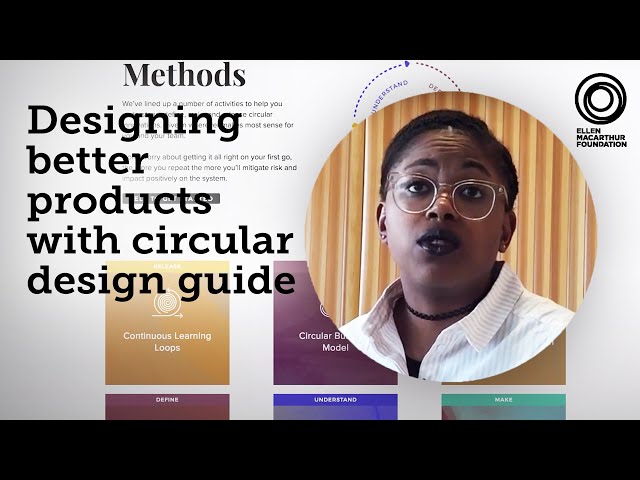
This video collection features academics and students sharing their insights into circular design and demonstrating their use of the Circular Design Guide. These resources aim to inspire other educators to integrate circular design into their curricula.
The Circular Design Guide is a free online tool offering 24 downloadable methods and resources for applying circular design principles. Explore it at circulardesignguide.com.

This video collection features academics and students sharing their insights on circular design and demonstrating their use of the Circular Design Guide. These resources aim to inspire other educators to integrate circular design principles into their curricula.
The Circular Design Guide is a free online tool, offering 24 downloadable methods, case studies, and resources for applying circular design. Explore this comprehensive guide at circulardesignguide.com.

Ellen MacArthur and Stella McCartney co-hosted the launch of the Ellen MacArthur Foundation’s report, "A new textiles economy: Redesigning fashion's future." The report urges the fashion industry to adopt a new vision and foster cross-industry collaborations to achieve it.
The current "take-make-dispose" model causes significant environmental damage and economic loss. Every second, a garbage truck of textiles is landfilled or burned, resulting in an estimated USD 500 billion loss annually. By 2050, the industry could consume a quarter of the world's carbon budget. Additionally, it pollutes oceans with half a million tonnes of microfibres yearly, impacting food chains.


Relive the most impactful moments from the 2017 Summit.
Our curated highlights package offers a concise overview of the key discussions and presentations.
Watch all the essential recaps now.

Explore the principles of biomimetic design in Michael Pawlyn's chapter, featured in the Ellen MacArthur Foundation's latest publication: "A New Dynamic 2: Effective systems in a circular economy."
Order your copy of "A New Dynamic 2" here: tiny.cc/newdynamic2.
Learn more about the Ellen MacArthur Foundation: ellenmacarthurfoundation.org.

Join us for DIF 2014.
Register for your free pass at thinkdif.co/me.

The Schools and Colleges team interviewed UWC SEA students in Singapore. These students evolved from up-cycling plastic bags to embracing regenerative design, ultimately establishing a circular consultancy. They share insights into their journey and the consultancy's mission.
Learn more about our work in schools: Ellen MacArthur Foundation - Schools & Colleges.
We invite you to share your systems thinking or circular economy education story with us.

Students from UWC SEA in Singapore, who evolved from up-cycling plastic bags to regenerative design, share their insights. They offer ideas on how schools and institutions can foster learning for the circular economy.
Discover more about our educational initiatives and contribute your own systems thinking or circular economy story. Visit the Ellen MacArthur Foundation's Schools & Colleges program: https://www.ellenmacarthurfoundation.org/programmes/education/schools-colleges.
The Schmidt MacArthur Fellowship invites postgraduate and graduate students interested in the circular economy to apply. The submission deadline is February 12.
Find out more and submit your application on the Ellen MacArthur Foundation website: ellenmacarthurfoundation.org/programmes/education/schmidt-macarthur-fellowship.

The Schools and Colleges team interviewed UWC SEA students in Singapore. Initially up-cycling plastic bags, their work evolved towards regenerative design. These students now share their top five essential 21st-century skills for schools.
Learn more about our schools program here. We also invite you to share your systems thinking or circular economy education story with us.

The New Plastics Economy is a three-year initiative dedicated to building a functional plastics system.
Learn more about this project by visiting newplasticseconomy.org.
The animation was created by Simon Tibbs.
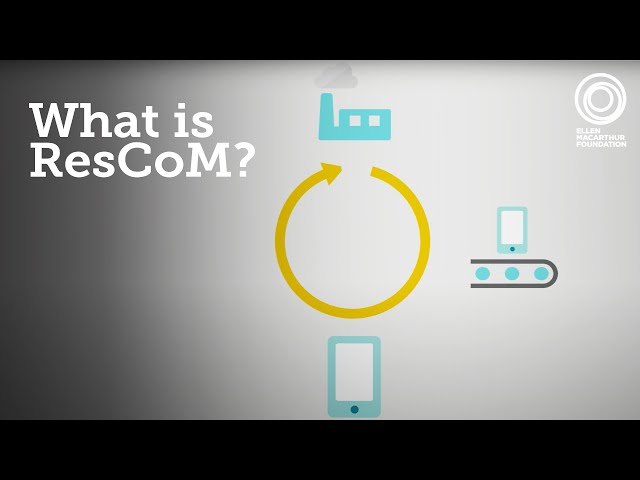
Discover ResCoM (Resource Conservative Manufacturing), a project developing an innovative methodology and software platform. Its aim is to implement closed-loop manufacturing systems within industry. Learn more at ResCoM website.
This project has received funding from the European Union’s Seventh Programme for research, technological development, and demonstration under grant agreement No 603843.
Hunter Lovins discusses soil and the circular economy in an engaging clip. Her insights are featured in the Ellen MacArthur Foundation's latest publication, "A New Dynamic 2: Effective systems in a circular economy."
Order your copy of the book: tiny.cc/newdynamic2
Learn more about the Ellen MacArthur Foundation: www.ellenmacarthurfoundation.org

Ellen MacArthur delivered a special presentation on the circular economy.
This occurred at the BSR Conference 2015, held in November 2015 in San Francisco, California.

Climate change and increasing raw material scarcity demand a radical shift from traditional business models. A circular economy is essential.
Businesses are uniquely positioned to lead this transformation by controlling waste, utilizing cleaner energy sources, and collaborating with NGOs and governments.
This concept was highlighted in an article published on May 14, 2013, by The Guardian.
Environmental Scientist and Advocate
What EarthSayers stands for
Discover Diverse Voices on EarthSayers
Unlike algorithm-driven platforms that push you into a content bubble, we ensure you hear a variety of perspectives from scientists, activists, Indigenous leaders, business innovators, and everyday citizens working toward sustainability.
EarthSayers CINEMA
Watch, learn and lead—sustainability starts with you.
The Many Passions of Matteo Lane
Matteo Lane is a multifaceted artist—stand-up comedian, painter, singer, and Broadway performer. In this interview, he shares how these skills intertwine in his creative process, likening art to a tree that branches out in various directions.
We explore his role as Billy Flynn in Broadway’s Chicago, his journey from bar shows to international comedy tours, and the evolution of gay representation in comedy. Lane also discusses his artistic roots at the School of the Art Institute of Chicago, his admiration for Maria Callas, and his philosophy of focusing on the journey of creation rather than the end product.
Official website: pbs.org/americanmasters


