




Special Collections:
Food Security

跨境动物疫病威胁全球粮食安全和经济发展。加强伙伴关系和持续投入对于保护动物卫生和建设韧性农业体系至关重要。此视频介绍全球跨境动物疫病防控合作计划(GPP-TAD),旨在通过“同一健康”方法支持疫病的预防和控制。
GPP-TAD汇聚各国政府、区域组织、发展伙伴和私营部门,围绕共同优先事项开展协调行动,推动资源向最具影响力的领域倾斜。了解更多信息,请访问 FAO。

منذ منتصف عام 2025، حصل 1,700 مزارع في قطاع غزة على مدخلات زراعية ومساعدات نقدية مشروطة من منظمة الأغذية والزراعة للأمم المتحدة (الفاو). بفضل هذا الدعم، أصبح بإمكانهم إنتاج ما يكفي من الخضروات الطازجة لأكثر من 120,000 شخص.
شاهد الفيديو لمعرفة المزيد عن هذا المشروع المدعوم من بلجيكا والاتحاد الأوروبي ووزارة الخارجية الإيطالية ومكتب الأمم المتحدة لتنسيق الشؤون الإنسانية. لمتابعة الفاو على وسائل التواصل الاجتماعي، يمكنك زيارة: فيسبوك, إنستغرام, لينكدإن, تيك توك, تويتر, و ويبو.

Since mid-2025, 1,700 farmers in the Gaza Strip have received agricultural inputs and conditional cash from the Food and Agriculture Organization of the United Nations (FAO). This support has enabled them to produce enough fresh vegetables for over 120,000 people, funded by Belgium, the European Union, Italy, and the United Nations Office for the Coordination of Humanitarian Affairs.
Watch the video to learn more about this initiative. Subscribe to FAO's channel here. Follow FAO on social media: Facebook, Instagram, LinkedIn, TikTok, Twitter, Weibo. © FAO: www.fao.org #SDGs #Agenda2030 #GlobalGoals

Rangelands and pastoralists are essential for maintaining ecosystems and biodiversity.
NGOs, cooperatives, and civil society can support and protect these vital resources through six key actions.
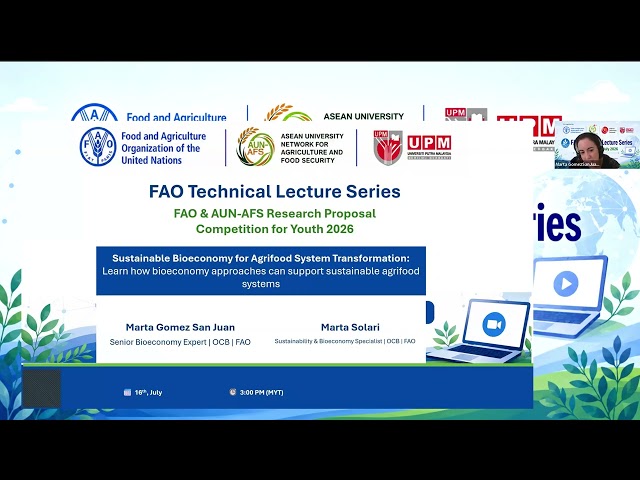
This FAO Technical Lecture Series webinar, part of the FAO & AUN-AFS Research Proposal Competition for Youth 2026, discusses the sustainable bioeconomy’s role in transforming agrifood systems. Presented by Marta Solari and Marta Gómez from FAO, the session covers how bioeconomy can create value from biological resources, reduce waste, and enhance climate resilience.
The discussion includes practical examples from various countries, focusing on waste valorization, bioinputs, and value chain development. It emphasizes the importance of innovation, green jobs, youth engagement, and collaboration for building sustainable agrifood systems. For more information, visit FAO.
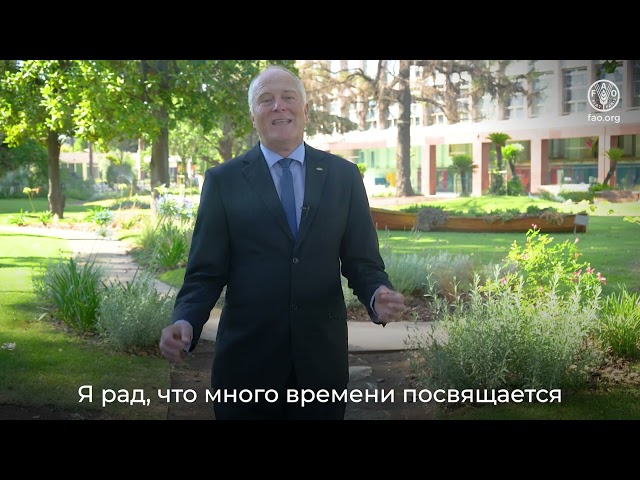
Enrico Perotti, Secretary of the International Plant Protection Convention (IPPC), opens the Regional IPPC Seminars, highlighting the crucial role of contracting parties and regional organizations in shaping plant health protection. He emphasizes that these seminars serve as a key annual forum for discussing IPPC management, strategy, standard development, and capacity-building activities, allowing regions to share experiences and address challenges.
The seminars focus on International Standards for Phytosanitary Measures (ISPM) projects, implementation initiatives like the IPPC EFS Program, and the IPPC "Plant Health" Virtual Campus. They also provide updates on programs related to maritime container transport, diagnostic laboratory networks, and the African Phytosanitary Program.
Subscribe! YouTube
Follow FAO on social media: Facebook, Instagram, LinkedIn, TikTok, Twitter, Weibo.
© FAO: FAO #SDGs #Agenda2030 #GlobalGoals

In this episode, Corinna Hawkes, Director of Agrifood Systems and Food Safety Division, discusses transforming agrifood systems through a systems approach. She emphasizes the importance of understanding the relationships, incentives, and power dynamics that influence these systems, using examples from Brazil, Sierra Leone, Tanzania, and New York City.
Hosted by Katrin Park and produced by Eduardo De La Chica, the episode covers various topics, including the marketing of unhealthy foods to children, aligning incentives, and the challenges of short election cycles versus long-term commitments. For more details, view the transcript and subscribe to the FAO YouTube channel.

Innovation can revive degraded soils. In Burkina Faso, farmers use the zaï technique, which involves creating small planting pits to capture rainwater, aiding in land restoration and community resilience.
Learn more about this impactful method and its benefits for agriculture. #WorldFoodDay #UNCCDCOP17 #AgInnovation

This FAO Technical Lecture Series webinar, part of the FAO & AUN-AFS Research Proposal Competition for Youth 2026, emphasizes the significance of food composition data for research, nutrition analysis, and evidence-based policymaking in the Asia-Pacific region.
Presented by Dr. Fernanda Grande from FAO, the session discusses how accurate nutrient information aids dietary assessments and policy development. It also highlights the role of FAO and INFOODS in enhancing food composition databases, improving data quality, and supporting stakeholders in understanding food content for sustainable agrifood systems transformation. More information can be found at FAO Food Composition.

This FAO Technical Lecture Series webinar introduces the One Country One Priority Product (OCOP) initiative, aimed at transforming agrifood systems. Dr. Xuan Li from FAO discusses how OCOP helps countries identify and promote Special Agricultural Products with unique characteristics and market potential.
The session highlights the role of sustainable production, value addition, and responsible value chain development in improving smallholder farmers' livelihoods and strengthening rural economies. It emphasizes the importance of partnerships, youth engagement, and evidence-based approaches to enhance local agricultural products and create more resilient agrifood systems. More information can be found here.

This FAO Technical Lecture Series webinar, part of the FAO & AUN-AFS Research Proposal Competition for Youth 2026, introduces the One Health approach to combat antimicrobial resistance (AMR) in agrifood systems. Dr. Alessandro Patriarchi from FAO discusses AMR as a shared challenge across human, animal, plant, and environmental health, emphasizing the need for coordinated action.
The session highlights FAO’s RENOFARM initiative, which promotes responsible antimicrobial use and good practices in food production. It also underscores the importance of youth, researchers, and institutions in developing evidence-based solutions to mitigate AMR risks and enhance the sustainability of agrifood systems. For more information, visit FAO's website.

The FAO Technical Lecture Series webinar focuses on sustainable land, soil, and water management as essential for resilient agrifood systems. Presented by FAO experts, it covers integrated solutions to address water scarcity in agriculture, including WASAG, policy support, and partnerships.
The session also discusses managing soil salinity, the role of opportunity crops in enhancing agrobiodiversity, and the need for integrated approaches to tackle climate change and water scarcity. For more information, visit FAO WASAG.
Subscribe to the FAO YouTube channel here and follow FAO on social media: Facebook, Instagram, LinkedIn, TikTok, Twitter, Weibo.

This FAO Technical Lecture Series webinar, part of the FAO & AUN-AFS Research Proposal Competition for Youth 2026, addresses food loss and waste in agrifood systems. Dr. Luciana Delgado, FAO Technical Advisor, emphasizes the importance of reliable data to identify when and why food loss occurs, guiding targeted actions.
The session introduces two FAO digital tools: FLAP, for measuring food losses at the producer level, and Optiwaste, designed for organizations to monitor and reduce food waste. Data-driven tools can enhance decision-making, improve food security, and promote sustainable agrifood systems.

This FAO Technical Lecture Series webinar, part of the FAO & AUN-AFS Research Proposal Competition for Youth 2026, focuses on integrated agriculture-aquaculture systems and governance for sustainable aquaculture development. Dr. Oluwafemi Ajayi, an Aquaculture Specialist from FAO, discusses how effective governance can enhance productivity and resilience in aquatic food systems.
The session highlights FAO’s Blue Transformation agenda, emphasizing sustainable aquaculture intensification and responsible fisheries management. It also explores how integrated systems can improve resource efficiency and food security. Practical examples, such as rice-fish systems, illustrate how better policies and investments can foster sustainable agrifood systems. For more information, visit FAO.

The FAO in Georgia hosted Professor Yining Xia, Chief Chinese Expert from the Institute of Food Science and Technology of China, under the One Country One Priority Product (OCOP) initiative. This mission, supported by the FAO-China South-South Cooperation (SSC) Programme, focuses on promoting sustainable development, innovation, and market diversification for Georgia's historic wine.
Stay updated by subscribing to the FAO YouTube channel: Subscribe. Follow FAO on social media: Facebook, Instagram, LinkedIn, TikTok, Twitter, Weibo. © FAO: FAO #SDGs #Agenda2030 #globalgoals

Enrico Perotti, secretario de la Convención Internacional de Protección Fitosanitaria (CIPF), inauguró los Talleres Regionales, subrayando la importancia de las partes contratantes y las organizaciones regionales en la sanidad vegetal global. Estos talleres son un foro clave para discutir avances en gobernanza, estrategia y desarrollo de capacidades de la CIPF, permitiendo el intercambio de experiencias y prioridades entre regiones.
Los talleres abordan proyectos de Normas Internacionales para Medidas Fitosanitarias (NIMF), la iniciativa ePhyto de la CIPF, y temas actuales como contenedores marítimos y redes de laboratorios de diagnóstico. Para más información, suscríbete a FAO en YouTube y síguenos en Facebook, Instagram, LinkedIn, TikTok, Twitter, y Weibo.

This FAO Technical Lecture Series webinar, part of the FAO & AUN-AFS Research Proposal Competition for Youth 2026, focuses on Indigenous Peoples’ food and knowledge systems, emphasizing Free, Prior and Informed Consent (FPIC) in nutrition research.
Presented by FAO experts Pablo Innecken and Alejandra Lizárraga Peña, the session underscores the importance of respecting Indigenous Peoples’ rights and decision-making in research. It highlights how their food systems enhance biodiversity, promote healthy diets, and support climate resilience, advocating for ethical and collaborative research practices.
More information can be found at FAO. Subscribe to our channel here.

In this video, FAO Chief Economist Máximo Torero discusses the Hand-in-Hand Initiative (HIHI) and its upcoming Investment Forum, where countries will connect with agrifood investors to drive meaningful change. He invites everyone to join from October 13 to 16 in Rome.
The HIHI Investment Forum, part of the World Food Forum, aims to unite national authorities and global investors to create partnerships that accelerate agrifood systems transformation and support the Sustainable Development Goals.
Subscribe to FAO on YouTube and follow them on Facebook, Instagram, LinkedIn, TikTok, Twitter, and Weibo.

This video showcases the collaboration between FAO and the UK PACT programme in Cross River State, aimed at helping coastal communities protect their environment and secure their futures. The "Integrated Management of Mangrove Ecosystem and Expansion of Social Protection for Fisheries and Forest Dependents" project supports around 5,000 individuals in adopting nature-based businesses such as beekeeping, aquaculture, and mushroom farming.
Through this initiative, local families are reducing pressure on mangrove forests, increasing their income, and contributing to the restoration of their coastlines.
Subscribe! YouTube | Follow FAO on Facebook, Instagram, LinkedIn, TikTok, Twitter, Weibo. © FAO: fao.org #SDGs #Agenda2030 #GlobalGoals

The FAO, supported by the Foreign, Commonwealth & Development Office through the Building Local Resilience in Syria project, is helping wheat farmers restore and sustain their livelihoods. They promote climate-smart practices to prepare farmers for climatic shocks and agricultural threats, enhancing resilience and food security.
Stay connected with FAO: Subscribe on YouTube, follow on Facebook, Instagram, LinkedIn, TikTok, Twitter, and Weibo. Visit FAO for more information.
Environmental Scientist and Advocate
What EarthSayers stands for
Discover Diverse Voices on EarthSayers
Unlike algorithm-driven platforms that push you into a content bubble, we ensure you hear a variety of perspectives from scientists, activists, Indigenous leaders, business innovators, and everyday citizens working toward sustainability.
EarthSayers CINEMA
Watch, learn and lead—sustainability starts with you.
The Many Passions of Matteo Lane
Matteo Lane is a multifaceted artist—stand-up comedian, painter, singer, and Broadway performer. In this interview, he shares how these skills intertwine in his creative process, likening art to a tree that branches out in various directions.
We explore his role as Billy Flynn in Broadway’s Chicago, his journey from bar shows to international comedy tours, and the evolution of gay representation in comedy. Lane also discusses his artistic roots at the School of the Art Institute of Chicago, his admiration for Maria Callas, and his philosophy of focusing on the journey of creation rather than the end product.
Official website: pbs.org/americanmasters


